A major modernization program can establish clear enterprise requirements and still require a different execution path at every site.
VA’s Electronic Health Record Modernization effort illustrates why.

Before a VA medical center transitions to the Federal EHR, the department conducts structured functional and technical assessments designed to understand how the facility operates, identify infrastructure and technology gaps, define required remediation, and determine whether the site is ready to proceed.

That is an important distinction.


Readiness is not a single construction milestone or technology installation. It is a condition created when physical infrastructure, technology, clinical operations, medical devices, workflows, people, testing, security, and transition activities are sufficiently aligned to support the mission.

Two medical centers may be preparing for the same enterprise EHR while facing very different physical conditions, clinical environments, equipment requirements, connectivity constraints, local interfaces, workflows, and operational demands.

The challenge, then, is not simply defining readiness.

It is carrying that readiness baseline through execution.

Requirements have to remain connected to scope. Scope has to remain connected to schedule. Construction and technology dependencies have to stay visible. Testing and commissioning have to produce evidence. Operational continuity has to be protected while work moves forward. Leaders need enough visibility to know whether identified gaps are actually closing.

For acquisition and program leaders, that creates a useful question throughout execution:

Is the project progressing, or is the environment becoming ready?

Those are not competing ideas.

The strongest modernization programs make them the same thing.

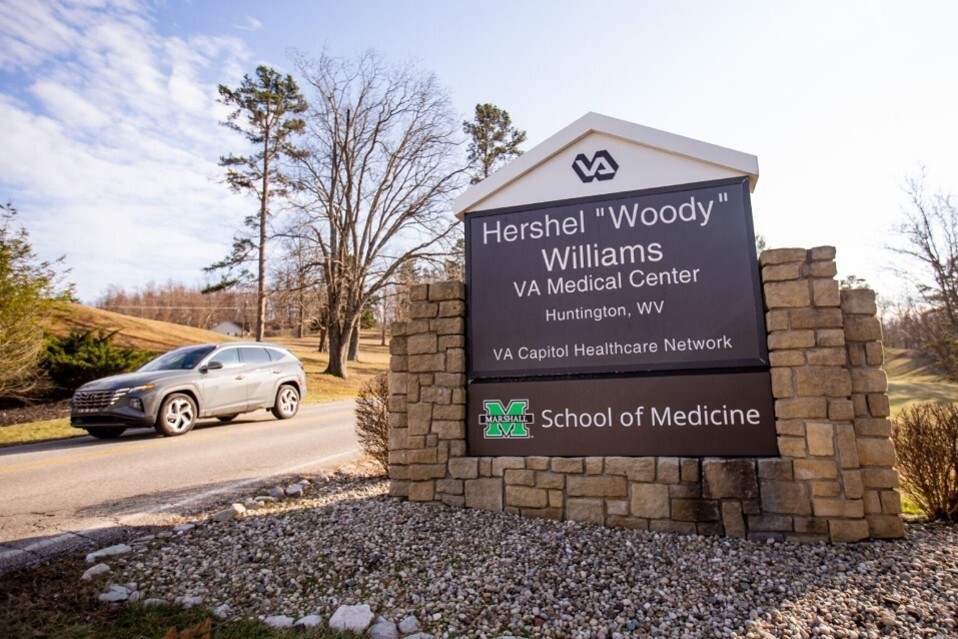
Hershel Williams VAMC
// Hershel “Woody” Williams VA Medical Center | Huntington, West Virginia
SSPC is providing Construction Management services for the medical center’s EHRM Infrastructure Upgrades and Patient Floor Modernization efforts. Our team supports technical reviews, construction coordination, schedule and cost monitoring, quality assurance, and coordination with VA personnel and contractors across an active healthcare campus. 


Readiness Begins Before Construction  

VA has devoted significant effort to making readiness an upstream planning discipline within EHR modernization.

Its site assessments examine both what a medical center does and what its environment must support before transition. Functional assessments look at current services, workflows, organizational impacts, local requirements, and the expected effort required for transition. Technical assessments examine existing conditions and identify infrastructure upgrades needed to support the system.

That work establishes an essential baseline.

It recognizes that enterprise modernization becomes local when it reaches a facility.

A common technology platform may require different work at different sites because each medical center has its own building conditions, clinical specialties, network environment, equipment, devices, support spaces, operational constraints, and existing infrastructure.

That site-specific understanding matters because modernization is ultimately delivered through physical places where people are already performing the mission.

The readiness assessment tells the program what has to change.

Execution has to make those changes real.

The Readiness Baseline Has to Survive Execution

Once gaps are identified, the work becomes a coordination problem.

A network requirement may depend on pathway construction.

A technology installation may depend on power, cooling, secure space, cabling, equipment-room readiness, or physical access.

A clinical device may depend on connectivity, security approvals, interoperability requirements, and testing.

A renovation may affect staff access or require temporary operating conditions.

A commissioning activity may depend on multiple preceding scopes being complete at the same time.

These are not separate modernization stories.

They are parts of the same readiness condition.

That is why one of the most important functions of Construction Management, Program Management, and project controls is maintaining traceability between what the assessment identified and what is happening in execution.

A readiness gap should lead to a defined scope.

That scope should appear in the schedule.

The schedule should show the activities and dependencies required to close it.

Testing, inspection, commissioning, or acceptance should demonstrate that the work achieved the intended condition.

Leadership should be able to see where that process stands.

In practical terms, the chain is straightforward:

Requirement → gap → scope → execution → validation → readiness

The difficulty is keeping that chain intact across a complex program with many stakeholders and parallel workstreams.

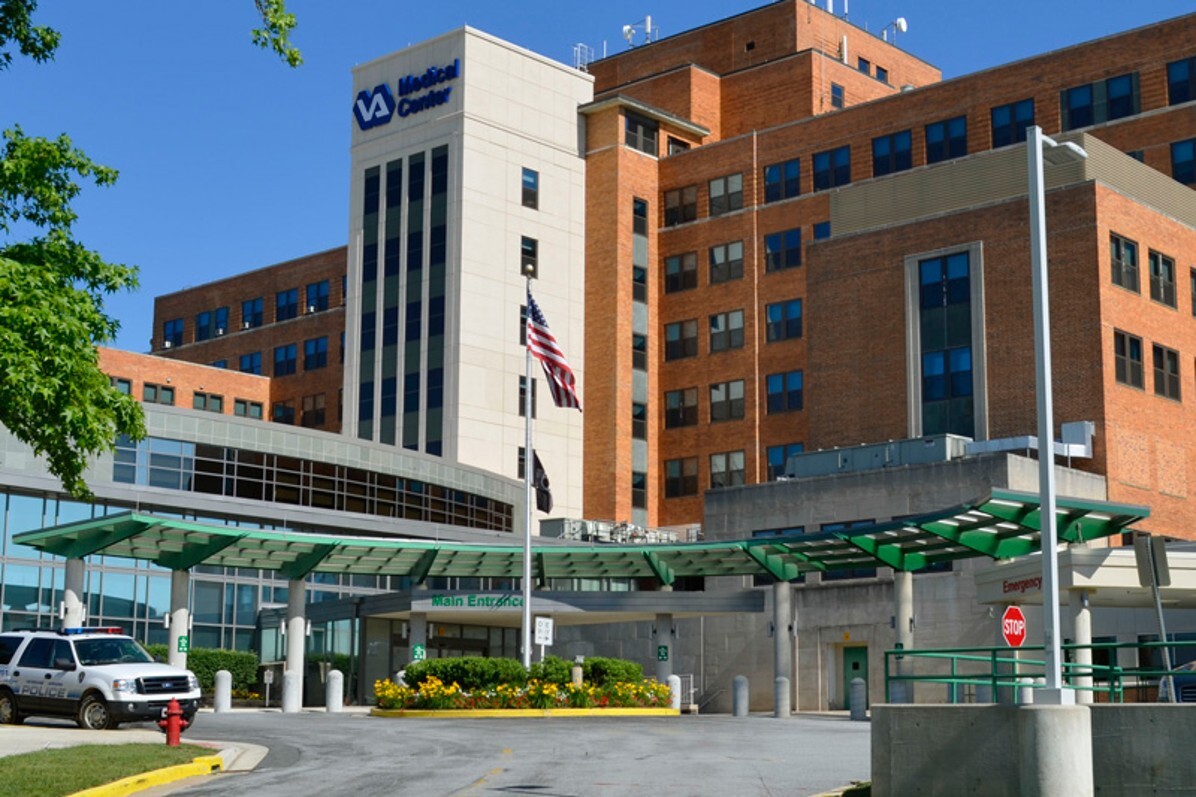
Wilmington VA Medical Center
// Wilmington VA Medical Center | Wilmington, Delaware
SSPC is providing Construction Management services for infrastructure improvements across multiple buildings, including campus fiber infrastructure, telecommunications room renovations, duct bank work, and systems associated with the medical center’s new data center. 


Resolve the Problem Before It Reaches the Field   

One of the most effective opportunities to protect that chain comes before construction begins.

Experienced Construction Managers do more than review drawings for completeness. They evaluate whether the design can actually be built as intended and whether it reflects the conditions that exist at the site.

That means comparing plans and specifications across disciplines and examining how electrical, mechanical, structural, architectural, fire-protection, telecommunications, utilities, equipment, access, phasing, and required outages interact.

The objective is simple: identify conflicts while they can still be resolved on paper.

A utility conflict, inadequate equipment clearance, overlooked shutdown requirement, incomplete design detail, or mismatch between facility infrastructure and technology requirements may initially appear manageable.

Once materials have been procured or construction is underway, the same issue can trigger RFIs, redesign, change orders, rework, procurement delays, lost production time, and effects on downstream activities.

For SteerBridge Construction Managers, constructability review is therefore more than a design-quality exercise. It is an early schedule-management and risk-reduction activity.

Finding a scope gap, sequencing problem, or infrastructure dependency early gives the project team more options.

Finding it after installation has begun can turn the same issue into a schedule constraint.

That distinction is central to readiness.

The time invested in a comprehensive design and constructability review on the front end can prevent significantly greater delays during construction. More importantly, it helps preserve the connection between what the project intends to deliver and the facility conditions required to support the mission.

Modernization Is a Network of Dependencies

Facility modernization rarely operates as one schedule.

It is a network of schedules, decisions, constraints, and handoffs involving facilities, utilities, data infrastructure, technology, medical devices, cybersecurity, construction sequencing, equipment, access, safety, clinical operations, testing, commissioning, training, activation, and transition.

Each workstream can be managed competently on its own while the overall program still encounters risk where those workstreams meet.

That makes integration one of the central execution challenges.

A construction team may have a valid milestone.

A technology team may have a valid installation date.

Facility operations may have legitimate access restrictions.

A medical-device integration effort may have its own approvals and testing sequence.

All of those dates can make sense independently.

The program-level question is whether they still make sense when the mission needs them to converge.

Major equipment provides a useful example.

Procurement may be proceeding exactly as planned while the facility itself is not yet ready to receive the equipment.

Experienced CM/PM professionals look beyond the delivery date. They verify actual existing conditions, including equipment dimensions, access routes, room clearances, electrical capacity, connection requirements, installation sequencing, and compatibility with existing infrastructure.

That leads to a more useful definition of equipment readiness:

Equipment readiness is not simply whether an item has been procured. It is whether the facility is ready to receive, install, connect, and operate it.

A discrepancy identified before delivery may be a straightforward constructability issue.

The same discrepancy discovered when equipment arrives can become a major schedule constraint.

That is where project controls become more than reporting tools.

The most valuable schedule is not simply the one that records activity. It helps leaders see which activities control readiness, where dependencies remain unresolved, what has changed, what decision comes next, and what happens downstream if that decision moves.

The same is true of risk management.

A risk identified early can become a decision.

The same risk identified after it controls the schedule becomes a consequence. 

Jack C. Montgomery VA Medical Center
// Jack C. Montgomery VA Medical Center | Muskogee, Oklahoma
SSPC has been awarded a Construction Management task order supporting EHRM infrastructure upgrades at the medical center. The project will involve onsite construction administration, schedule and progress monitoring, quality assurance, project documentation, and coordination with contractors and VA stakeholders. 


The Mission Continues While the Environment Changes   

Healthcare modernization adds another layer of complexity: the facility is often still performing its mission while modernization is underway.

Patients still arrive.

Clinicians still work.

Facility teams still maintain critical systems.

Technology teams still prepare for future deployment.

Contractors need safe access.

Shutdowns and temporary conditions have to be managed carefully.

Operational continuity is therefore not something outside the construction plan.

It is part of the project environment.

That changes the questions execution teams have to ask.

How will the work affect access?

Which systems must remain operational?

What temporary conditions are acceptable?

What must happen before a shutdown can occur?

When can a renovated space actually transition to use?

What must be installed, tested, commissioned, accepted, or validated before that transition?

The physical environment cannot be considered ready simply because construction activity has ended.

Readiness exists when the environment can safely and reliably support what comes next.

Evidence Matters at the Readiness Gate

One of the strongest features of a mature readiness model is that progress has to be supported by evidence.

VA’s EHRM readiness approach reflects that principle.

Assessments identify gaps. Remediation activities address them. Testing and validation demonstrate whether requirements have been met. Readiness reviews help determine whether a site can proceed, whether limited residual risk can be managed, or whether additional work is required.

For a facilities and construction team, that means execution should generate more than completed activities.

It should generate a traceable record of readiness.

That may include validated inventories, completed corrective actions, drawings, test results, inspection records, commissioning evidence, acceptance documentation, schedule status, and documented residual risks.

This is where the distinction between activity and readiness becomes particularly useful.

A task can be complete without proving that the intended operational condition exists.

A strong execution process connects the two.

Where Construction and Facility Management Fits

SteerBridge approaches Construction and Facility Management through that broader execution lens.

The role is not to redefine VA’s readiness requirements.

It is to help carry those requirements through the physical, technical, operational, and program-management work needed to establish the required site condition.

That includes maintaining visibility across scope, schedule, dependencies, risk, stakeholders, construction activities, commissioning, and transition.

It also requires understanding where physical and digital requirements intersect.

Facility conditions affect technology readiness.

Technology requirements can affect construction scope and sequencing.

Device requirements can affect space, connectivity, security, and commissioning.

Commissioning affects turnover.

Turnover affects activation.

Operational requirements affect how and when work can occur.

The value of CM/PM support is in helping those relationships remain visible and manageable throughout execution.

That discipline starts before work reaches the field.

SteerBridge Construction Managers use design and constructability reviews to test whether planned work aligns with actual site conditions and whether requirements across disciplines can be executed in the intended sequence. They look for conflicts involving infrastructure, equipment, access, phasing, outages, and technology requirements while the project team still has time to resolve them without disrupting critical construction activities.

The same discipline continues during execution.

A piece of equipment, for example, is not ready simply because it has been procured. The facility must be able to receive it, accommodate it, power it, connect it, commission it, and ultimately operate it.

Those are the kinds of details that connect a readiness baseline to conditions in the field.

Schedules, controls, assessments, and readiness gates are most valuable when they reflect what is actually happening in the facility and help leaders act while options still exist.

Contract Access Creates an Execution Responsibility

SteerBridge’s position on VA’s Construction Management and Program Management Services multiple-award BPA expands the company’s opportunity to compete for future VA CM/PM requirements.

That access is meaningful, but it is not the outcome.

The value to the customer will be determined through execution.

Can risks be surfaced early?

Can dependencies remain visible?

Can assessment findings stay connected to remediation work?

Can construction, technology, facility operations, testing, and activation remain coordinated?

Can leadership see whether the conditions required for readiness are actually being established?

Those are the questions that matter after award.

Contract access creates the opportunity to compete.

Execution creates confidence.

From Investment to Readiness

VA’s EHR modernization experience demonstrates something important about complex federal modernization:

Readiness has to be designed, assessed, executed, validated, and sustained.

It begins before construction and continues through transition.

That means the execution layer matters.

Requirements have to remain connected to site conditions.

Site conditions have to inform scope.

Scope and dependencies have to remain visible in the schedule.

Designs have to be tested against constructability and actual field conditions.

Equipment readiness has to account for the facility conditions required for installation and operation.

Work has to be coordinated around ongoing operations.

Testing and commissioning have to verify results.

Leadership needs evidence that identified gaps are actually closing.

None of that diminishes the importance of investment, acquisition, construction milestones, or technology deployment.

It connects them to the outcome they are intended to produce.

For leaders responsible for complex modernization, the question worth carrying into each program review remains straightforward:

Is the project progressing, or is the environment becoming ready?

When those two answers remain aligned, investment is moving toward usable mission capability.

If your modernization requirement depends on coordinating facilities, technology, schedule, stakeholders, risk, testing, commissioning, and operational transition, connect with SteerBridge’s CFM Team. 

 
Interested in Joining the Team?

Explore open roles supporting mission-driven technology: Join the Team

About STEERBRIDGE

At SteerBridge, our vision is to be the trusted partner in delivering transformative solutions that empower our clients to navigate complex challenges and seize opportunities for growth.

Rooted in our core values of integrity, innovation, and engaged leadership, we strive to elevate the standards of service within the government contracting community.

Mike Kropiewnicki
Mike Kropiewnicki
Oct 10, 2026, 3:48:06 PM

// Contact Us

Ready to Move the Mission Forward?

Whether you are modernizing systems, improving decision-making, strengthening infrastructure, or scaling operations, SteerBridge brings the team, approach, and execution discipline to move your mission forward.

// Partnership Contact

Business Inquiries Email

partnerships@steerbridge.com

For teaming agreements, subcontracting, and federal acquisition inquiries.

Team Contact

(703) 663-8299

Communications

communications@steerbridge.com

For media and general correspondence inquiries

// Careers Contact

Careers Phone

(703) 663-8299

Office

8521 Leesburg Pike Vienna, VA 22182