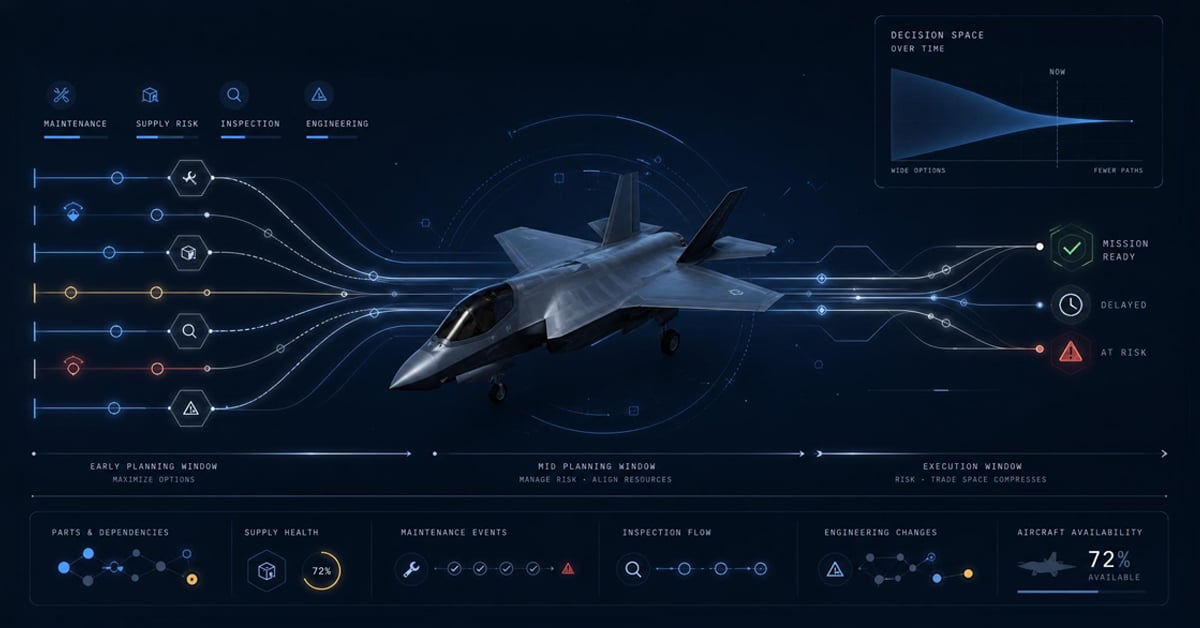

From Investment to Readiness: The Execution Layer of VA Modernization
The Readiness Picture Is Never Finished
Aviation has always required people to make decisions with incomplete and changing information.
SteerBridge President of Aviation Greg Summa describes this through his experience flying the F/A-18 and F-35.
In the F/A-18, different systems gave the pilot different pieces of information. Each had strengths, limitations, and what Greg describes as an “uncertainty volume.” The pilot had to judge how much confidence to place in each source, work through conflicting information, and keep updating the picture as conditions changed.
The important part was not just that there were multiple sensors.
It was that the picture was never final.
New information could strengthen an assessment or challenge it. Something that seemed important a few moments earlier might matter less. Something uncertain could suddenly become critical.
The F-35 reduces some of that workload through sensor fusion, combining information from multiple sources into a more coherent picture.
Outside the cockpit, aviation organizations face a similar challenge on a much larger scale.
Maintenance, supply, engineering, training, personnel, facilities, logistics, cybersecurity, schedules, and operational requirements are all contributing information. That information keeps changing.
A maintenance finding may change a supply requirement. A supply delay may shift the maintenance plan, affecting training, aircraft availability, personnel, or the schedule. An engineering determination can change the picture again.
There is no point where the organization can simply say, “We have the readiness picture. We’re done.”
Readiness is a continuous estimation problem.
The organization is constantly reassessing what it can generate, what could prevent it, how confident it is in the current picture, and which assumptions may no longer hold.
The practical question is what those changes mean for the choices still available.
Every Change Creates New Dependencies
Aviation conditions rarely change in isolation.
Say an analytical model identifies an unusual pattern in component demand. Before anyone starts changing a maintenance plan or moving material, there is a more basic question to answer:
Does this signal deserve action?
SteerBridge Junior Data Analyst Liis Sam encountered that problem while working with aviation parts-demand data. Certain data points were creating irregular spikes that did not seem consistent with observed failure behavior. Instead of accepting the output at face value, she worked with data architects and aviation subject-matter experts to investigate what was driving the pattern.
Not every signal should trigger the same response. A weak signal may call for more investigation. A stronger one may justify checking inventory, changing planning assumptions, or bringing engineering into the conversation.
As confidence changes, the reasonable response can change with it.
Once the signal is credible enough to matter, the dependencies begin to move. Which aircraft could be affected? Is the material available? Does engineering need to weigh in? What maintenance, training, or operational plans could now be at risk?
The signal itself may be the same.
The consequences around it are not.
That is why trustworthy analysis matters operationally. The goal is not to remove uncertainty before anyone acts. It is to give people enough confidence in the evidence to choose a response that fits what is actually known.
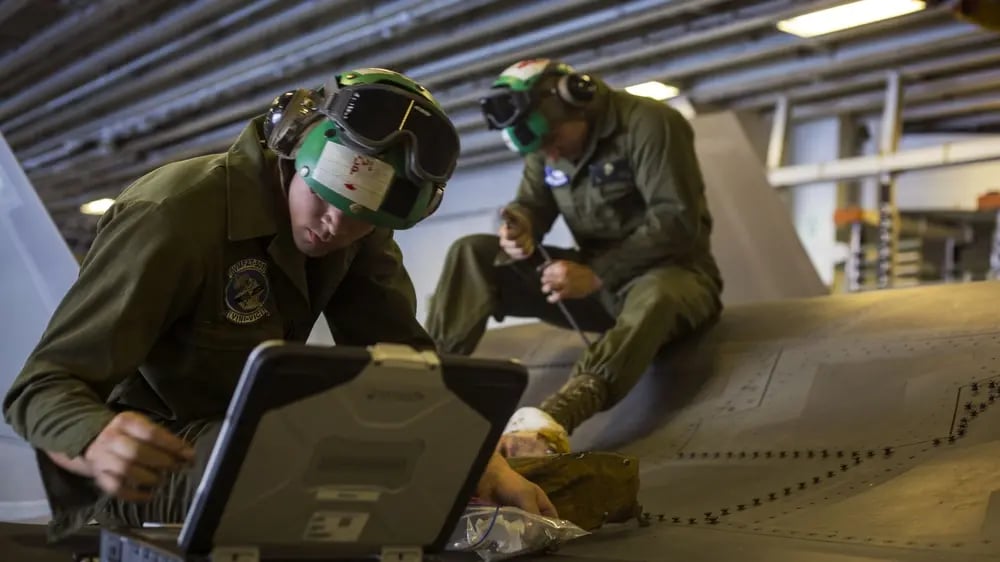
Photo by Pfc. Remington Hall, USMC
The Goal Is to Preserve Decision Space
Timing is more than a reporting metric.
Think about the same emerging problem at different points.
At 60 days, the organization may have time to investigate, reposition material, coordinate with suppliers, adjust maintenance sequencing, or change planning assumptions.
At 30 days, some of those options may remain, but they may cost more or create greater disruption.
At seven days, leaders may be choosing among a much smaller set of tradeoffs.
Once the aircraft is unavailable, the decision changes again. The question is no longer whether action can prevent the consequence. The consequence is already here.
That is decision-space compression.
As the organization gets closer to the operational impact, practical choices tend to narrow.
A useful readiness environment should help leaders see that happening. It should show what changed, how confident the organization is in the signal, which dependencies are affected, what options remain, and where time starts taking those options away.
The value of prediction is not simply receiving a forecast earlier.
It is what the organization can still do because the forecast arrived early enough to matter.
Two Clocks Are Running
Seeing a problem earlier helps, but an early signal does not automatically create an advantage.
The organization still has to do something with it.
There are really two clocks running.
The first is signal latency: how long it takes to detect a changing condition, understand what it means, and recognize that it deserves attention.
The second is decision latency: how long it takes to turn that understanding into authorized action.
Either one can shrink decision space.
A team may identify a problem weeks before it affects the mission and still lose useful options if the response has to move through unnecessary layers before someone with the right expertise and authority can act.
Fleet Readiness Center Southwest offers a current example.
NAVAIR reported on Aug. 12 that FRCSW’s H-53 program reduced aircraft turnaround time by 45.42 percent over the past year, from 469 days to 256 days. NAVAIR tied those gains directly to increased aircraft availability and Fleet readiness.
The program’s work supports the CH-53E Super Stallion, so it is important to distinguish the broader H-53 program name from the aircraft itself.
What makes the example useful is how the program approached the problem.
NAVAIR describes stronger integration across engineering, manufacturing, logistics, quality assurance, and production control, along with empowering people closer to the work to resolve issues at the appropriate level.
The lesson is not that every decision should be decentralized.
Some decisions carry safety, engineering, fiscal, or operational consequences that require higher authority.
The point is simpler: the path from a problem to the person who can act on it should be clear, and it should match the consequence of the issue.
Better information matters.
So does shortening the distance between the problem and the person qualified to act on it.
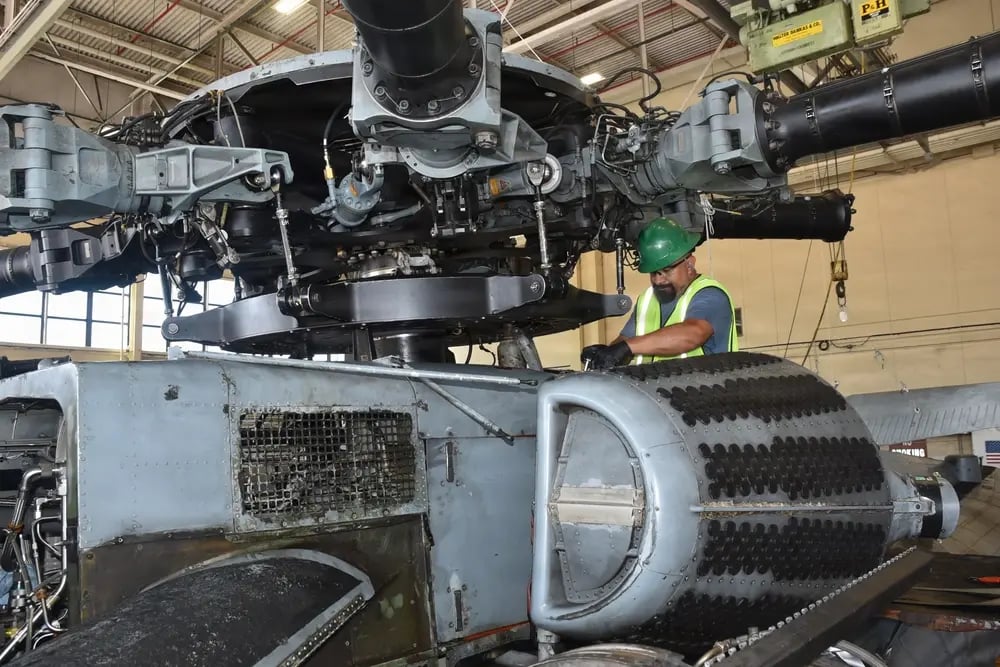
Photo by Michael A Furlano
Uncertainty Should Change the Conversation, Not Stop It
Readiness decisions rarely happen with perfect information.
Forecasts have uncertainty. Supply information changes. Maintenance findings can invalidate assumptions. Schedules move. Engineering guidance can alter what is technically possible.
When that happens, organizations can fall into two bad habits. They either present an answer with more confidence than the evidence supports, or they wait for certainty that may never come.
Neither is especially useful.
A better decision environment makes uncertainty part of the decision.
How confident are we in the signal? Which assumption has the greatest effect on the outcome? What information would actually change the decision?
And one question matters more than most:
What gets harder if we wait?
Sometimes the reason to act is not that the organization knows exactly what will happen. It is that waiting will remove an option that is available today.
The goal of readiness analytics is not to make uncertainty disappear. It is to make uncertainty understandable enough that qualified people can make sensible choices around it.
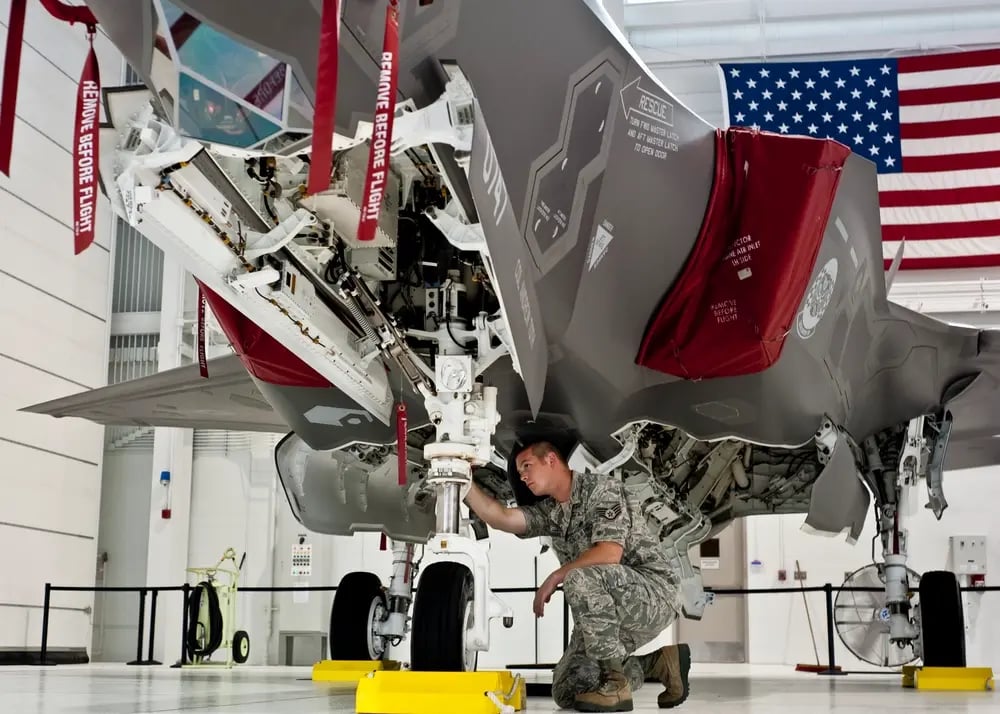
Photo By Christine Cuttita
Modernization Makes the Readiness Picture More Dynamic
This challenge becomes more important when aircraft remain in service while going through major modernization.
GAO’s recent B-52 review found challenges across major modernization efforts and called for stronger integration of modernization and sustainment planning. GAO also identified gaps in the consistent use of digital engineering tools that could provide decision-makers with more timely information across those efforts.
The broader issue extends well beyond the B-52.
Modernization changes sustainment assumptions.
A new configuration can affect maintenance, technical data, training, software, facilities, spares, support equipment, and workforce needs. A delay in one area can alter plans somewhere else. Engineering or obsolescence issues can change supportability and schedules.
The aircraft may still be the same tail number.
The environment required to keep it ready is not static.
Readiness systems have to account for those changing relationships rather than assume today’s dependencies will remain fixed.
The Aircraft Is Only Part of the Readiness Problem
The CH-53E example also shows why aircraft readiness cannot be treated as a maintenance problem alone.
Returning an aircraft to service can involve engineering, material availability, manufacturing, technical data, quality, production planning, workforce capacity, and decisions about conditions that were not anticipated when the aircraft entered maintenance.
A constraint in one area changes the choices available in another.
If a replacement part is unavailable, the question may move to repair engineering or manufacturing. If new work is discovered, the schedule and workforce picture changes. If an engineering determination takes longer than expected, other plans may have to move around it.
The aircraft is at the center of the mission, but the environment that keeps it available extends much further.
That is what makes lifecycle readiness more than a collection of sustainment functions.
It is the ability to keep the operating environment moving as the aircraft, its support system, and the mission around it change.
Action Should Create New Evidence
There is another part of the readiness cycle that often gets less attention:
What happens after the decision?
A team sees a signal, evaluates the information, chooses a course of action, and responds. Then reality provides an answer.
Maybe the intervention works as expected. Maybe the predicted problem never develops. Maintenance takes longer than planned. A part arrives sooner. An assumption turns out to be wrong.
That outcome should not disappear into the next reporting cycle.
It is new evidence.
An adaptive decision environment should make it possible to compare what the organization expected with what actually happened.
Was the signal useful? Was the forecast well calibrated? Did the chosen action preserve readiness? Did a workaround create an unintended consequence?
The answer should improve the next assessment.
That turns readiness into a learning loop:
Signal → interpretation → decision → action → observed outcome → updated understanding
This matters for analytics because assumptions and forecasts can be tested against actual results. It matters for operators because experience can carry into the next decision. It also gives technology teams a clearer measure of whether the information they delivered actually helped.
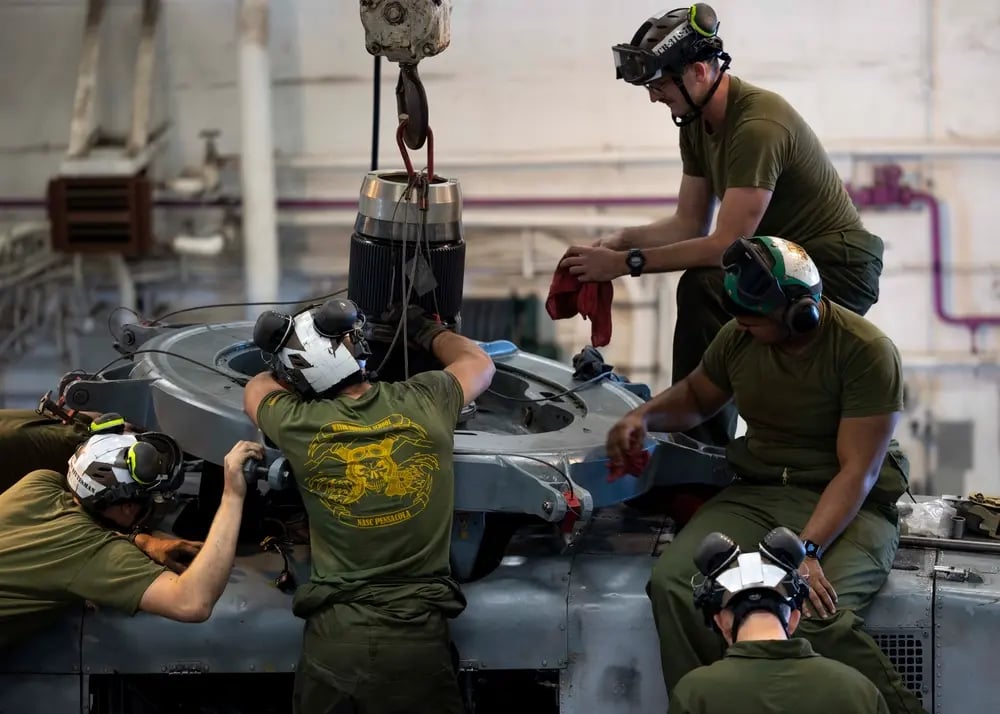
Photo by Petty Officer 2nd Class Danilo Reynoso (USN)
Adaptation Requires the Right Expertise and the Right Authority
No single discipline can do all of this well.
The aviation leader is focused on what changed, why it matters, what the operational consequence is, and how much time remains to act.
The analyst is testing whether the signal is real, where the information came from, what assumptions shaped the result, and how much confidence it deserves.
Engineers are working through technical consequences and connecting information across systems and workflows. Program and sustainment teams are balancing implementation, resources, lifecycle requirements, and what can actually be supported.
Those perspectives need to meet around the problem, not after the problem has already moved.
But collaboration alone is not enough.
People also need to know who can make which decision.
A useful readiness environment should make the handoff from information to authority easier to understand. Routine issues should not become slow simply because the decision path is unclear. High-consequence decisions should reach the appropriate technical or operational authority with the evidence and context needed to act.
That is different from simply keeping a person “in the loop.”
The person has a role, a responsibility, and a level of authority.
Technology should help that person exercise it with better information and less unnecessary delay.
Readiness Is About What You Can Still Do Next
Aviation readiness will always involve status. Leaders need to know what is available, what is constrained, and what can support the mission.
But the more useful question comes right after that:
What can we still do about it?
An adaptive decision environment helps people recognize when conditions change, understand which dependencies moved with them, judge how much confidence the evidence deserves, and get that information to someone who can act before useful options begin to disappear.
Then it needs to keep learning.
Once the organization acts, the outcome becomes part of the next readiness picture. Forecasts can be tested. Assumptions can be challenged. Teams can see whether the action worked, whether the constraint moved somewhere else, and whether the decision came early enough.
That closes the loop:
Signal → interpretation → decision → action → observed outcome → updated understanding
Then the next decision begins from a better picture.
Technology connects the information. People create readiness.
The advantage comes from reducing the time it takes to understand change, reducing unnecessary delay between understanding and action, and learning from what happens next so the organization can preserve more options the next time conditions move.
References
- U.S. Government Accountability Office. B-52 Bomber: Air Force Actions Needed to Improve Major Modernization and Sustainment Efforts. GAO-26-109272. Published July 31, 2026.
- Naval Air Systems Command. FRCSW H-53 Program Sets the Standard for Depot Maintenance. Published August 12, 2026.
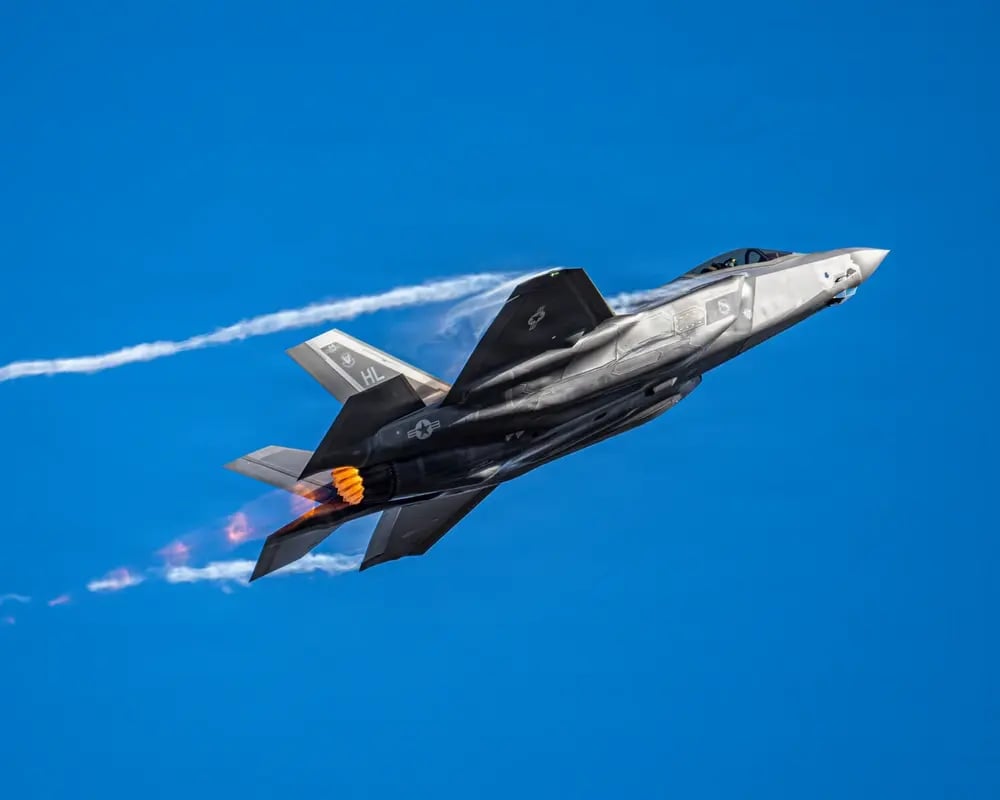
Photo by Staff Sgt. Nicholas Rupiper (USAF)

.jpg?width=500&height=500&name=Blog%20Image%20(1).jpg)